
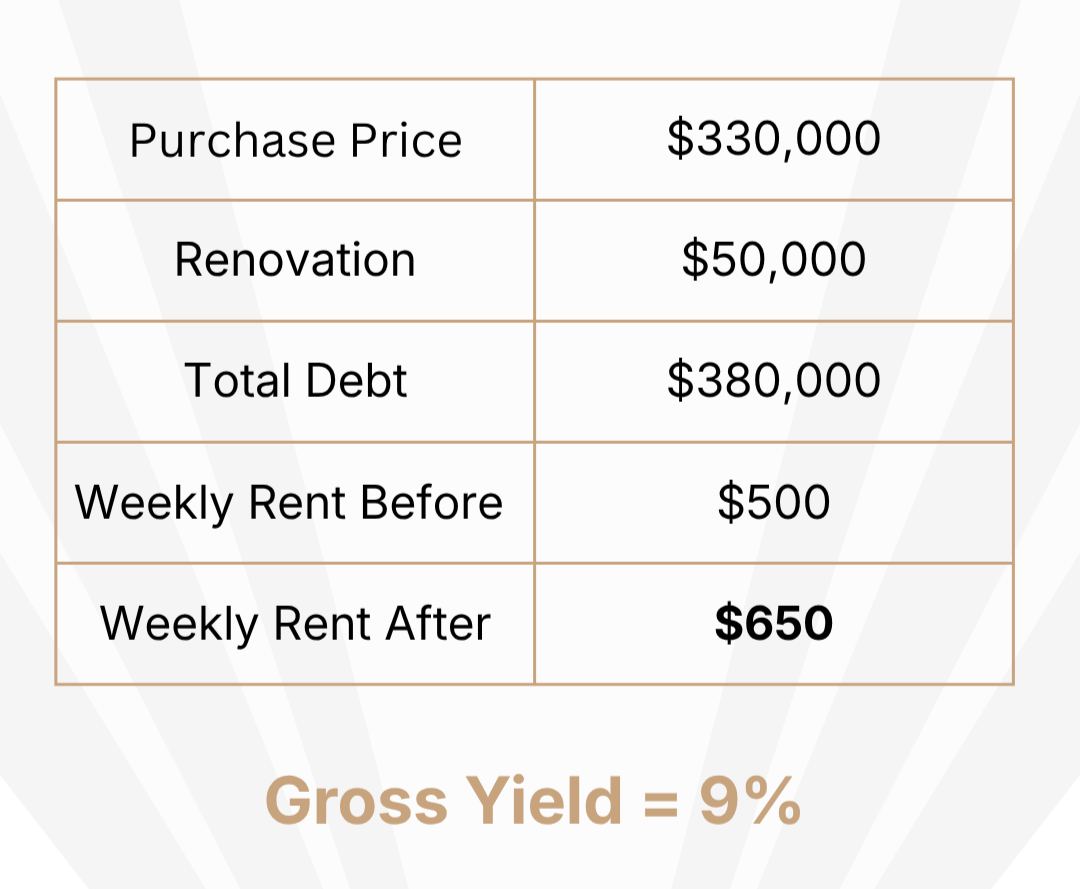
Short answer: yes, but not in Auckland. In 2026 there are still New Zealand properties under $400,000 that pay you every week, and almost all of them are in the regions. One Wolfe Property client bought a tired three bedroom home in the Manawatū for $330,000, added a fourth bedroom inside the existing walls, and now runs a 9% gross yield with more than $5,000 a year in positive cashflow after all expenses.
Here is exactly how the deal worked, the numbers behind it, and the three rules that made it repeatable.
The Numbers:
Before: the listing most investors scroll straight past
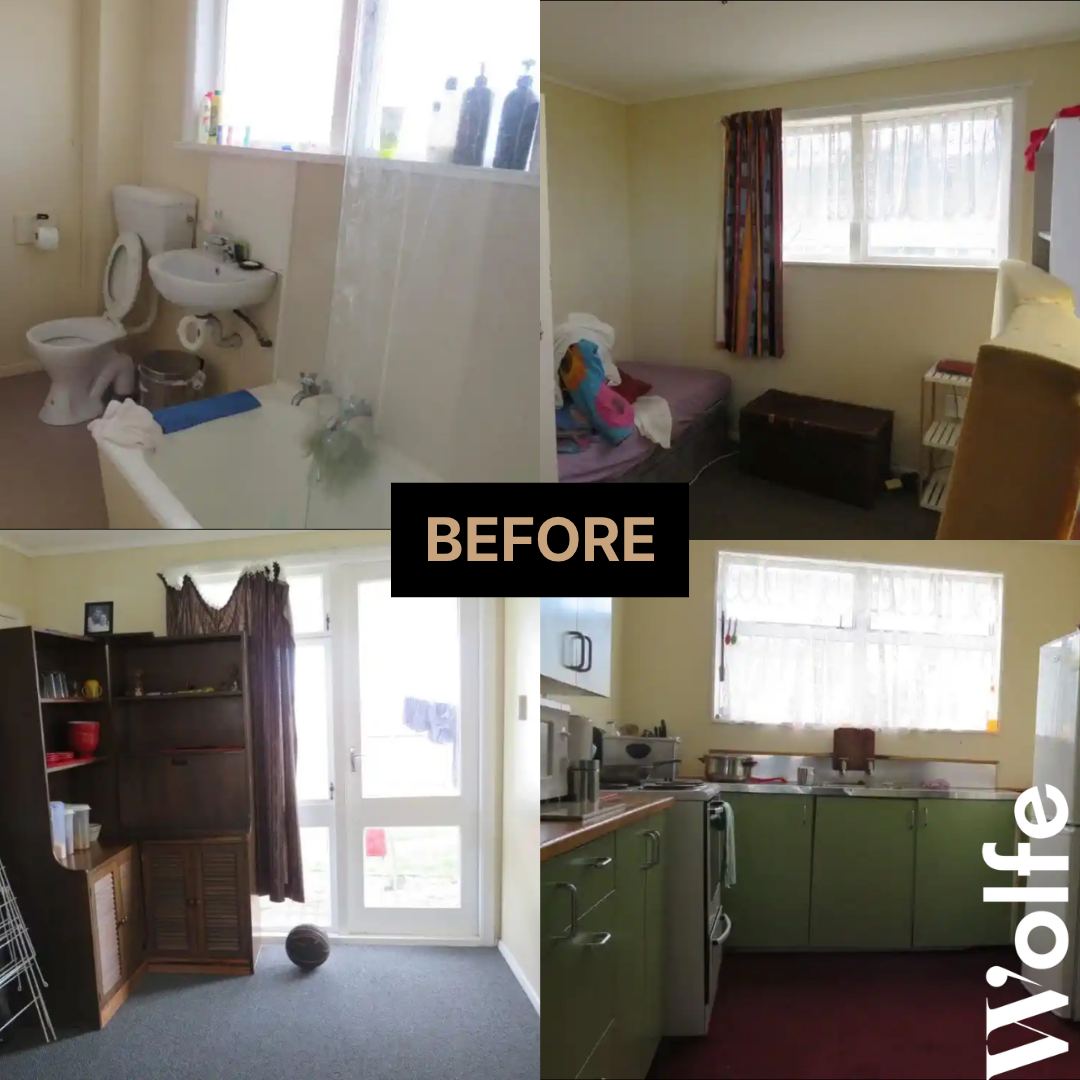
The property was a tired three bedroom home. Dated kitchen, dated bathroom, tired carpet, and photographs that did it no favours. It sat on the market because most buyers walked in and saw a renovation they did not want to do.
That is the point. A property that is easy to love is priced as though everyone loves it. The margin sits in the ones that need a plan rather than a designer.
At $330,000 with rent of $500 per week, the property was already producing a 7.9% gross yield on the purchase price. Respectable, but not enough to carry itself comfortably at 2026 interest rates.
The Cashflow Hack: add a bedroom, not an extension
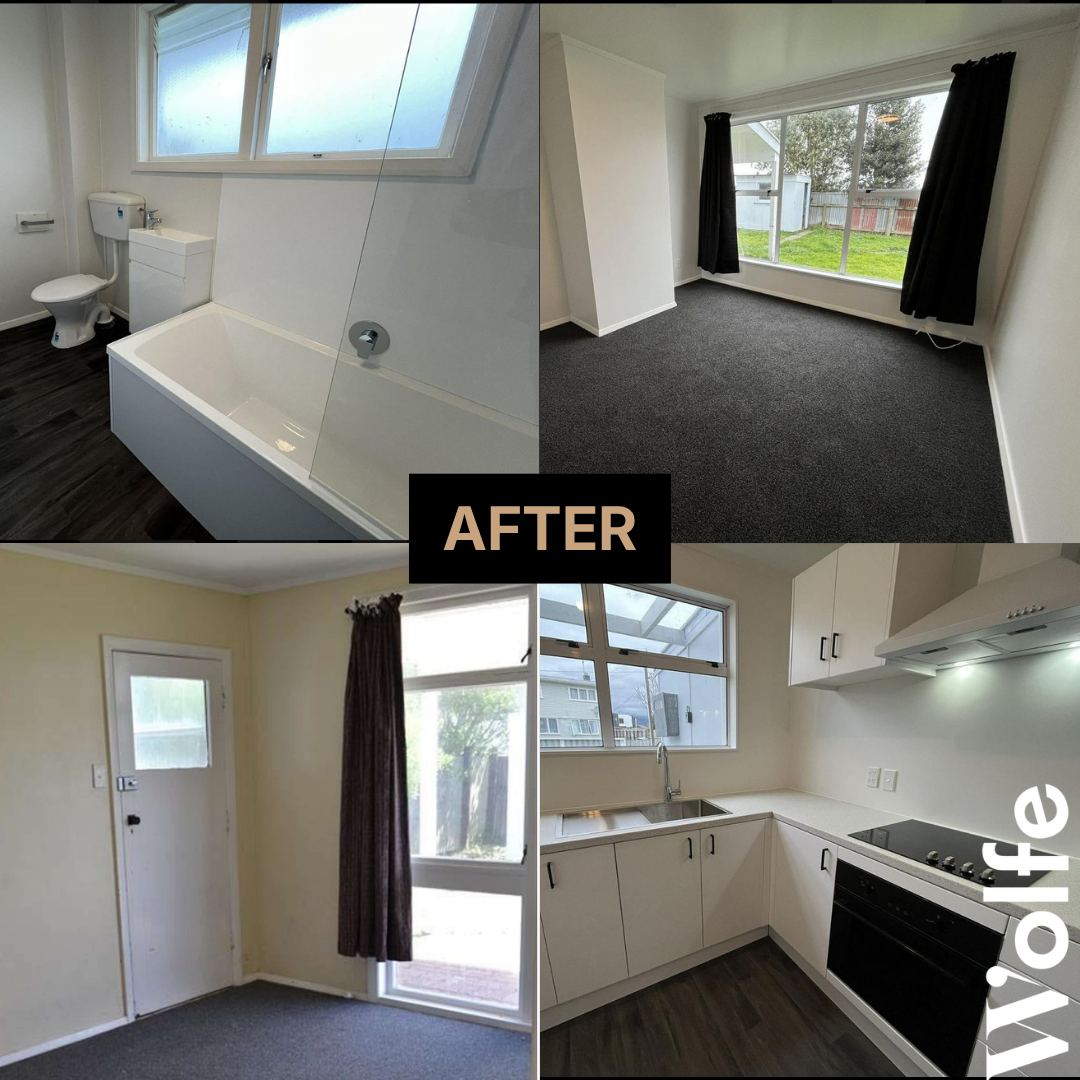
The single change that transformed the numbers was a fourth bedroom, created inside the existing footprint. No extension. No new roofline. No building consent.
Alongside it, a cosmetic renovation: paint, flooring, kitchen and bathroom refresh, and tidy up of the exterior. Total spend was around $50,000.
Rent moved from $500 per week to $650 per week. That is an extra $150 per week, or $7,800 a year, on a $50,000 spend. The renovation paid for itself in rent inside seven years and, more importantly, it repriced the asset immediately.
Why a bedroom is the cheapest lever in property
Rent in New Zealand is priced substantially by bedroom count. A three bedroom house and a four bedroom house in the same street, in similar condition, sit in two different rental brackets. Moving between those brackets by reconfiguring existing space is the lowest cost per dollar of rent gained that residential property offers.
Compare the options:
Add a bedroom inside existing walls: typically $5,000 to $15,000, and often $80 to $150 per week in extra rent
Extend the house: $3,000 to $5,000 per square metre, plus consent, plus time
Full kitchen and bathroom renovation: $30,000 to $60,000, and usually a smaller rent lift than a bedroom on its own
The bedroom is almost always the first lever to pull, and it is the one most investors overlook because it does not photograph as impressively as a new kitchen.
The numbers: how a 9% gross yield becomes real cashflow
Gross yield is annual rent divided by total cost. At $650 per week, annual rent is $33,800. Against total debt of around $370,000, that is a gross yield of just over 9%.
Gross yield alone does not pay anyone. What matters is what is left after the property pays for itself. At 100% debt and a 5% interest rate, the interest bill is roughly $18,500 a year. After rates, insurance, property management, maintenance and vacancy allowance, this property still returns more than $5,000 a year in the owner's pocket.
That is the difference between a property you feed every month and a property that feeds you.
Does a $400k property still exist in New Zealand in 2026?
Yes, and the honest version of the answer has two parts.
Where they are: the regions. Manawatū, Whanganui, Horowhenua, Taranaki, the central North Island, Southland and parts of Otago. These are working towns with real employment, real tenant demand, and entry prices that still allow a yield to exist.
Where they are not: Auckland. The maths does not work at Auckland entry prices, and no renovation strategy fixes a starting yield that low. Investors who insist on buying near home are, in most cases, choosing proximity over performance.
If you want an affordable property that pays you every week, you need to be willing to look where the numbers are rather than where you live.
The three rules behind this deal
1. Buy where the yield is, not where you live. Under $400,000 exists. It is regional. Decide whether you are investing for returns or for the comfort of driving past the property on a Sunday.
2. The bedroom add is the cheapest lever in property. Adding a bedroom inside the existing walls delivers the best return on renovation spend available in residential property. Look for houses with an oversized lounge, a large hallway, an internal laundry, or a wasted fourth space that can be reconfigured.
3. Renovate to increase the rent, not to your taste. This is not your Pinterest dream home. Every dollar spent must be justified by rent, by valuation, or by reduced maintenance. If a spend cannot be traced to one of those three, it does not go in the budget.
Before you copy this: the compliance checklist
A bedroom only counts as a bedroom if it can be legally and safely rented as one. Before you commit to a bedroom add, confirm:
Council requirements. Cosmetic work and non structural reconfiguration is frequently exempt from building consent under Schedule 1 of the Building Act, but exemptions are specific and interpretation varies by council. Confirm with the relevant council before work starts, and do not assume this deal's outcome applies to yours.
Room standards. The room needs adequate size, natural light, ventilation and an escape route to be marketed and insured as a bedroom.
Healthy Homes. Heating, insulation, ventilation, moisture ingress and draught stopping standards apply to the tenancy as a whole and must be met.
Insurance and valuation. Tell your insurer and your valuer about the reconfiguration so the property is recorded correctly.
Getting this wrong turns a great deal into an expensive one. Getting it right is straightforward if you check first.
Want results like this?
This deal was not luck. It was a repeatable process: buy in a region where the yield exists, find the property everyone else scrolls past, add the bedroom, renovate to the rent roll rather than to your taste, and run the numbers before you offer rather than after.
If you want to do this but do not know where to start, let's talk.