Flipping vs Buy and Hold in NZ: Why I'd Never Flip a Property
Flipping a property in New Zealand can cost you more than half the profit you create. On a typical $400k purchase with a $60k renovation, a flipper walks away with around $62k, while a buy-and-hold investor who refinances instead can access the full $140k of value created, tax free, and still own the property. That is why I'd never flip.
Here is exactly how the numbers play out, so you can decide for yourself.
The first three steps are the same
Whether you flip or hold, every good renovation deal starts the same way:
Buy under value. The profit is made on the purchase, not the sale.
Renovate smartly. Spend where it lifts the valuation, not where it looks nice on Instagram.
Lift the value of the property. The goal is a new valuation well above your total cost.
The strategies only split at step four: what you do with the value you have created.
What flipping a property actually costs in NZ
The flipper sells. And the moment they sell, the costs start stacking up: GST, income tax, marketing, agency fees, legal fees, and holding costs. A large chunk of that single profit disappears.
The example deal
Say an investor buys a property for $400k, spends $60k on renovations, and the new valuation comes in at $600k:
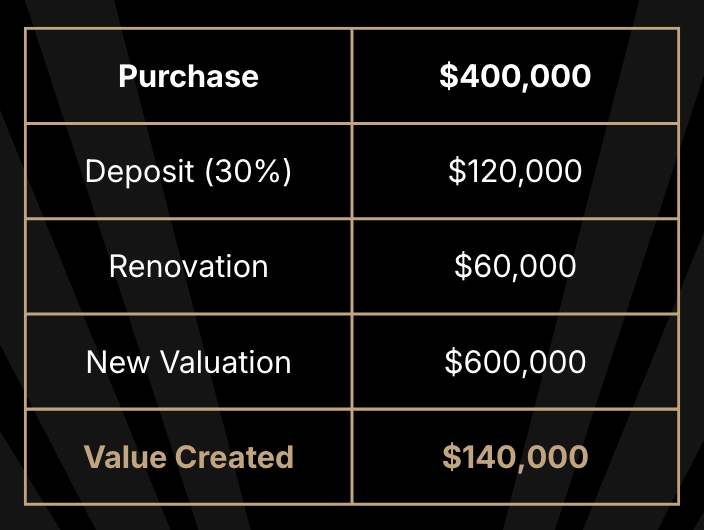
The simple math: that's $140k in value created.
What the flipper keeps
But after all sale costs, the flipper loses around $77k, roughly 55% of the value created:
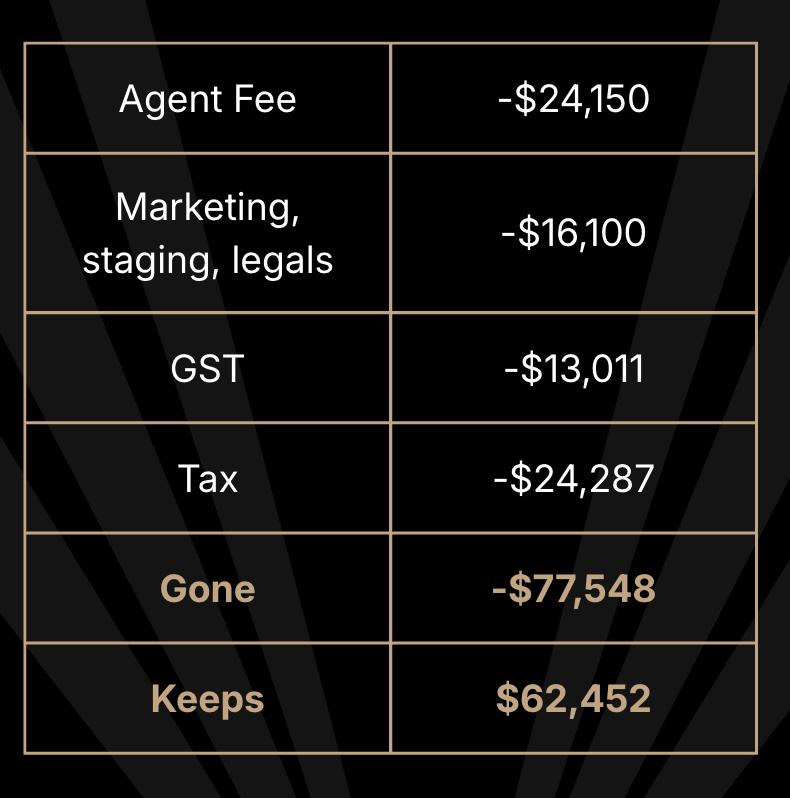
That is $62k in hand, and the asset is gone. No more rent, no more capital growth, and the next deal starts from scratch.
What the buy-and-hold investor does instead
The buy-and-hold investor refinances. The bank revalues the property after the renovation, and that new equity is released as a loan to fund the next project. No sale required.
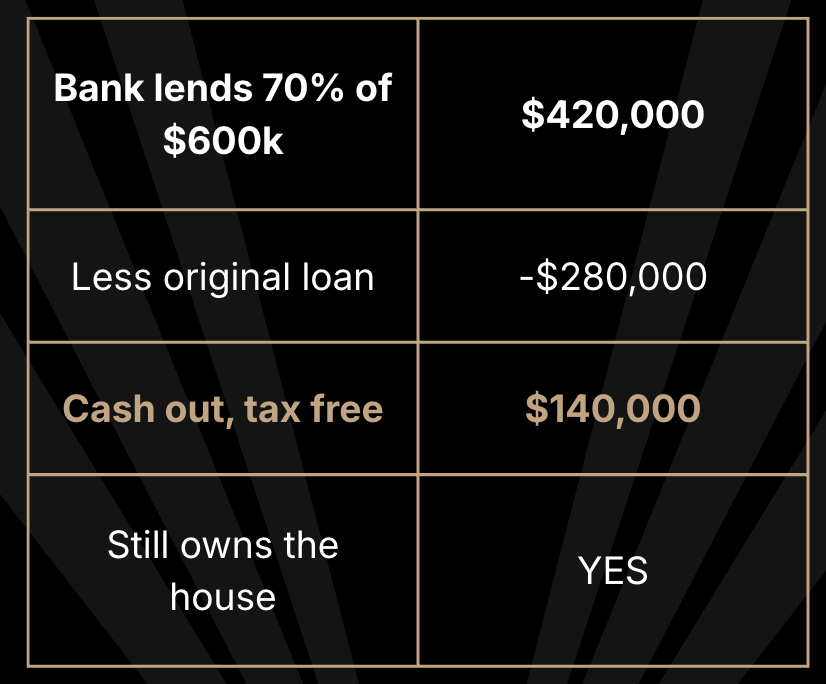
The investor draws down $140k as a loan to fund another property, holds and rents out the original, and keeps every dollar of the value created working for them.
Pro tip: get the post-renovation valuation done before you purchase. If the numbers do not stack up on paper, they will not stack up in real life.
Why flippers regret it
Here is what almost every flipper has told me over the years: they wish they'd HELD those properties, because they would have made significantly more since.
Flipping is a job. The income stops the day you stop.
Cashflow Hacking™ is a system. The equity helps fund the next deal, and the rent pays you either way.
Is flipping property worth it in NZ?
It can generate lump-sum cash, but on a typical deal roughly half the profit is lost to agent fees, marketing, GST, and tax. In the example above, $140k of value created shrinks to about $62k in hand, and you give up the asset, the rent, and all future growth.
What is the better strategy?
You buy under market value, renovate to lift the valuation, then refinance instead of selling. The bank lends against the new, higher valuation, releasing your created equity as cash to fund the next purchase, while you keep the original property as a rental.
The bottom line
Same purchase, same renovation, same value created. The flipper keeps $62k and owns nothing. The buy-and-hold investor accesses $140k, keeps the property, collects the rent, and rides the capital growth.
Want the equity working for you?